Intelligent Video Analytics.
For sites in remote locations or where low-level visibility is a regular challenge, intelligent video analytics in CCTV is an advanced intrusion detection and threat verification solution.
Learn more about our video analytics systems and solutions.


How Video Analytics Software Works
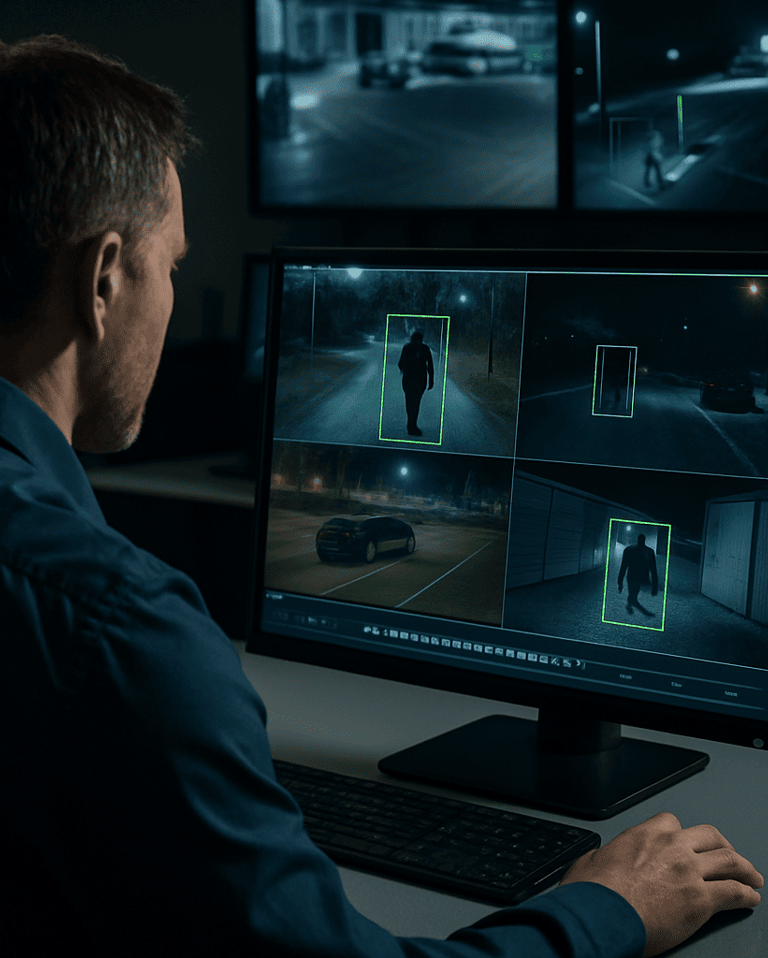
Video analytics software processes CCTV footage using artificial intelligence to identify events, objects and behaviour automatically. Instead of relying on human operators to watch screens, the software analyses video data continuously and generates alerts when predefined conditions are met.
Video analytics software works by ingesting video streams from IP cameras and preparing each frame for analysis
AI models analyse visual data to detect people, vehicles and other objects, then track their movement across the scene
Behaviour rules and detection logic determine whether activity represents a genuine threat and trigger alerts with supporting evidence
This software-driven approach transforms CCTV into an automated detection and verification system capable of operating at scale across complex environments.
Key Features of CCTV Video Analytics Systems
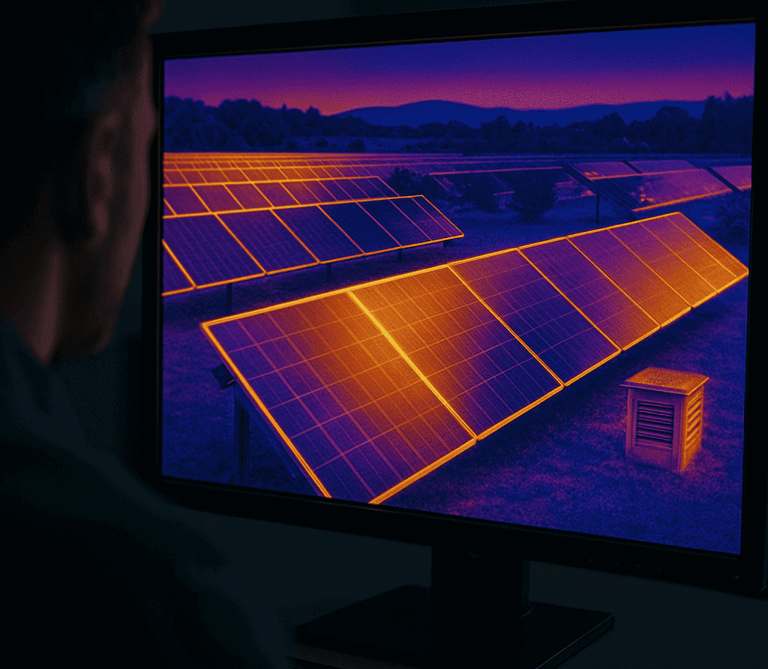
Modern systems support both edge and cloud processing, deep learning models for high verification accuracy, real-time detection, object classification, thermal analytics, vehicle and people tracking.
And, that’s not even mentioning health and safety monitoring, automated alerts and full integration with VMS platforms, alarms, access control and monitoring centres.
Altogether, Ai-based intelligent CCTV analytics is becoming standard in advanced intrusion detection and remotely monitored surveillance systems.


IVA Technology & Deployment Models
Intelligent video analytics software can be deployed in different ways depending on site layout, network capacity and operational requirements. The deployment model affects performance, scalability and how alerts are generated and verified.
Edge-based analytics run directly on cameras, reducing bandwidth usage and enabling faster local detection
Server-based analytics process video centrally, supporting advanced models and multi-camera correlation
Cloud and hybrid deployments offer scalability, centralised management and flexible processing for multi-site estates
Choosing the right deployment model ensures video analytics software performs reliably while meeting the practical demands of the environment.
Ai Based Alarm Verification
Modern security relies on more than cameras. It relies on intelligence.
Ai Video CCTV analytics showcases next-generation intrusion detection designed to detect events automatically, reduce false alarms and deliver real-time insights.
Whether you’re improving perimeter protection, strengthening monitoring or reducing risk, video analytics technology gives you the automation and data to act instantly.
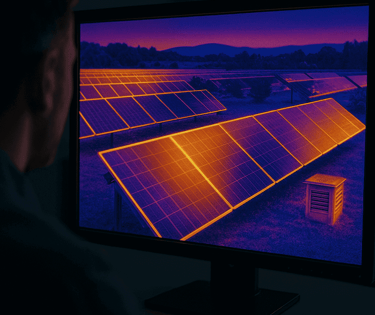
What is Video Analytics in CCTV?
Video analytics uses artificial intelligence and machine learning to interpret live or recorded CCTV footage.
How does CCTV analytics work?
Instead of relying on constant manual monitoring, CCTV video analytics systems and software automatically identify events, behaviours, and objects such as intrusions, people, vehicles, animals, loitering, queues, number plates, and thermal signatures.
It transforms CCTV from passive recording into proactive intelligence.


Intrusion Detection & Video Alarm Verification
Video analytic tech for CCTV surveillance enhances perimeter and intrusion protection by automatically identifying people, vehicles and suspicious movements in real time.
All in all, Ai based video verification is now an essential part of CCTV monitoring and monitored alarm systems. Reduced margin for error. Improved site security.
Instead of relying on basic motion detection, AI models analyse behaviour, direction of travel, movement patterns and object type to determine whether an event is genuinely threatening.
This reduces false alarms, increases accuracy in challenging environments and gives security teams faster, more reliable alerts for breaches, trespassing and unauthorised access.
How Ai Intelligent Video Analytics Improves Security Systems
Video analytics technology does not operate in isolation. In modern security architectures, it functions as part of a wider ecosystem designed to detect, verify and respond to threats efficiently.
Video analytics integrates with VMS platforms to manage camera feeds, alerts and recorded evidence across single or multi-site environments. It connects with alarm receiving centres and monitoring systems to support rapid verification and escalation when suspicious activity is detected.
Integration with access control, perimeter sensors and intrusion alarms strengthens overall situational awareness, ensuring that video analytics supports coordinated decision-making rather than acting as a standalone tool.


Ai Surveillance Analytics. Fewer False Alarms
Businesses, security teams and public-sector organisations use CCTV video analytics to improve threat detection, cut operational costs and speed up decision-making.
The right technology delivers faster alerts, fewer false alarms, better evidence for investigations, improved situational awareness and scalable monitoring without increasing staff workloads.
Any site that relies on CCTV benefits immediately from deploying Ai powered intelligent video analytics.
Although threats may be infrequent, the impact would be significant. As a result, robust threat assessment and Ai based visual verification are an integral tool in protecting sites, assets, people, and revenue.


Video Analytics vs Traditional CCTV Monitoring
Traditional CCTV systems rely heavily on human operators to observe live feeds or review footage after an incident occurs. This approach is reactive, labour-intensive and prone to missed events, particularly across large or unmanned sites.
Video analytics software solutions shift CCTV from passive observation to proactive detection. Automated analysis identifies threats in real time, filters out irrelevant movement and delivers verified alerts supported by visual evidence.
This reduces false alarms, improves response times and allows monitoring teams to focus on genuine risks rather than continuous screen watching. As a result, video analytics software provides a more scalable and reliable alternative to traditional CCTV monitoring.


Ai Video Analytics for a Range of Sectors
Video analytics supports a wide range of environments including critical infrastructure, solar farms, warehouses, logistics centres, retail stores, manufacturing, car parks, schools, campuses, local authorities, public spaces, hospitality venues and private estates.
If a site uses CCTV, intelligent video analytics strengthens its capabilities. All in all, this is what makes video analytics one of the best intrusion detection systems available.
Articles & Guides
Keen to learn more about the role of intelligent Ai based analytic software for CCTV surveillance systems? Read through our selection of articles and guides on video analytics technology, intrusion detection and alarm verification solutions.
Frequently Asked Questions
What is intelligent video analytics?
Intelligent video analytics uses AI to recognise objects, patterns and behaviour across CCTV footage. It helps systems detect intrusions, monitor perimeters and identify unusual activity without continuous human oversight. The technology reduces false alarms, speeds up verification and provides clear evidence for quicker decisions. This makes it highly effective for remote sites, logistics centres, solar farms and high-risk environments.
How does AI-based video analytics work?
AI-based analytics interprets live camera feeds using machine learning models trained to recognise people, vehicles and behaviour patterns. By analysing each frame in real time, the system detects potential threats earlier and with more accuracy than conventional motion-based systems. It improves verification, reduces false alerts, and supports scalable monitoring across large estates or remote outdoor zones.
What does AI do in modern security camera systems?
AI enhances camera systems by identifying objects, recognising movement patterns and interpreting activity automatically. Instead of relying on constant human supervision, the technology filters noise, highlights meaningful events and categorises people, vehicles or other objects. This improves accuracy, reduces workload for monitoring teams and sharpens real-time awareness, especially in large estates, remote locations and multi-camera environments.
Is intelligent analytics software AI-based?
Yes. Modern analytics relies on AI and machine learning to recognise objects, understand behaviour and detect patterns automatically. Earlier systems used basic motion detection, but today’s technology interprets scenes with far greater accuracy. AI enables cameras to distinguish between people, vehicles, wildlife and irrelevant movement, helping operators prioritise genuine risks and reduce unnecessary callouts.
How much does CCTV analytics cost?
Costs vary depending on camera type, AI capability, licensing model and whether processing happens on the edge or through a cloud platform. Some systems require per-camera licences, while others charge for analytics packs or enterprise features. Total cost also depends on monitoring requirements, integration needs and the scale of the site. Most organisations see savings through reduced false alarms and staff workload.
What is IVA in CCTV?
IVA, or Intelligent Video Analysis, refers to advanced software that helps cameras interpret scenes automatically. It detects objects, tracks movement and highlights behaviour that may require attention. IVA reduces the need for manual monitoring and supports accurate event detection, making it easier for organisations to secure perimeters, manage busy environments and improve incident response across large or multi-zone locations.
What is intelligent behavioural analysis?
Intelligent behaviour detection allows security cameras to recognise unusual or suspicious actions without manual monitoring. The system evaluates patterns such as loitering, climbing, running, tailgating or entering restricted areas, then flags activity that falls outside expected behaviour. This helps operators identify risks earlier, improve response times and reduce unnecessary false alarms across busy or complex sites.
What is a video analytics system?
A video analytics system combines cameras, AI software and event rules to interpret footage automatically. It identifies objects, tracks movement and highlights behaviour that may signal risk. These systems help operators focus on verified activity rather than constant monitoring. They are widely used for perimeter protection, operations support, incident investigation and remote site security where accuracy and automation are essential.
What Ai software is used for video analysis?
Video analysis software typically includes AI-driven detection engines, behaviour modelling tools and event-trigger systems. Solutions may run on cameras (edge AI), on servers or through cloud platforms. They integrate with VMS systems, allowing operators to manage alerts, review evidence and adjust detection rules. Businesses choose software based on risk level, environment, camera compatibility and monitoring requirements.
What technology helps cameras identify people, vehicles and unusual activity?
Cameras use AI-driven object classification and behaviour modelling to recognise people, vehicles and unexpected actions. These tools examine shapes, movement patterns and context to determine what is happening in each scene. By understanding the difference between routine activity and potential threats, the system improves situational awareness and helps operators focus on meaningful events across complex sites.
Which is the best video analytics company?
There is no single “best” provider because performance depends on the environment, camera setup, integration requirements and site size. Leading manufacturers offer strong AI features, reliable object detection and scalable management tools. The right choice varies based on outdoor conditions, risk profile, budget and whether monitoring is handled internally or through a remote security operations centre.
Which AI is best for video analysis?
The best AI for video analysis is one that reliably detects people, vehicles and behaviour in the specific environment you monitor. Outdoor sites require models trained for low-light conditions, wildlife detection, and long-range detection. Indoor environments benefit from behaviour modelling and object recognition. Ultimately, the strongest systems combine high accuracy with low false alerts and seamless integration with your VMS.
How do automated threat assessment systems work?
Automated threat assessment tools monitor camera feeds, analyse behaviour and compare activity against predefined rules or normal patterns. When something appears unusual, such as intrusion, loitering, unauthorised access or rapid movement, the system flags the event for verification. This speeds up decision-making, reduces time spent reviewing footage and helps teams prioritise genuine risks over background motion or harmless events.